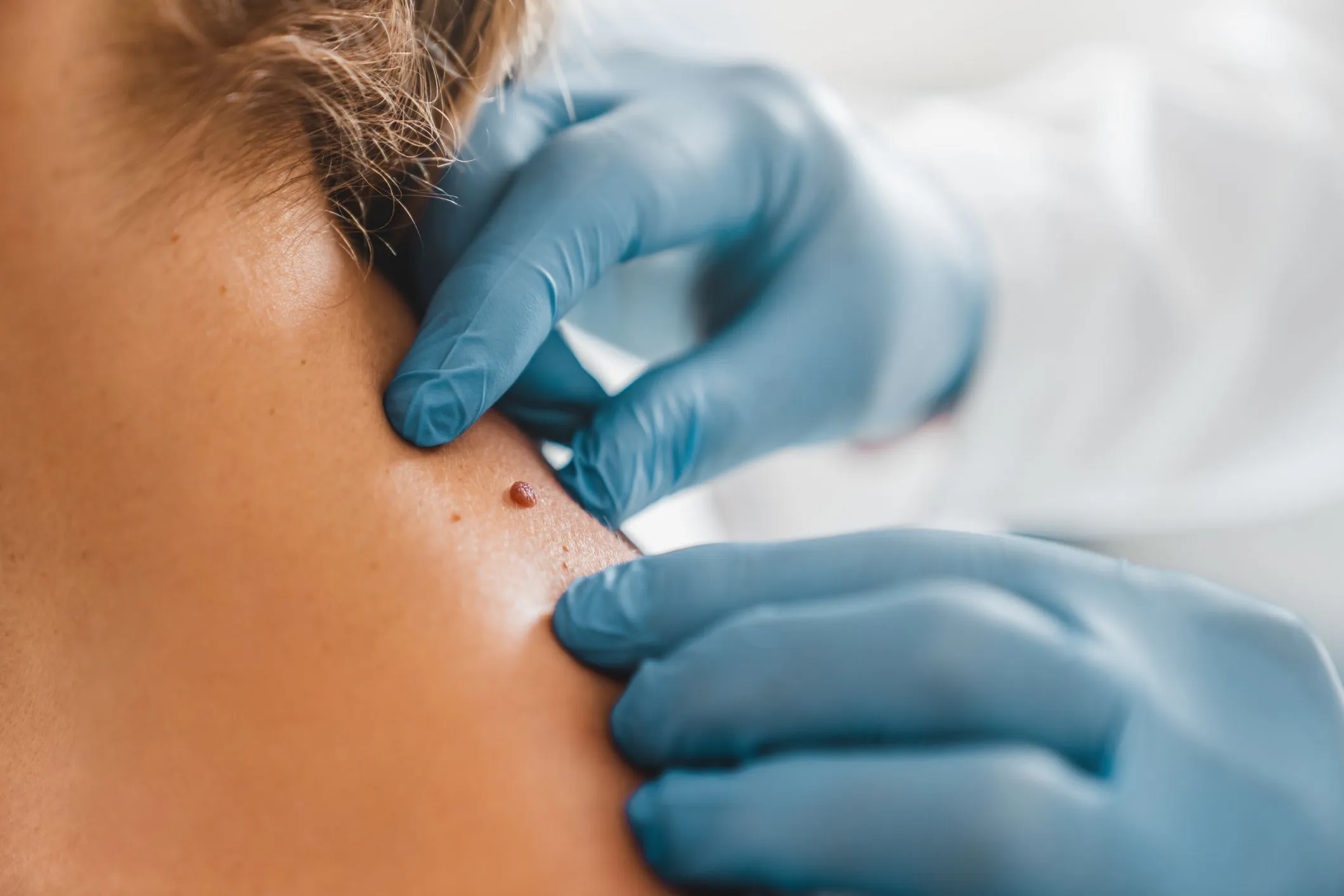

Skin tags are small, flesh-coloured growths that often appear where skin rubs against skin. You may notice them on your neck, underarms or eyelids.
They’re benign and pose no health threat. However, they can snag on clothing, jewellery or even your glasses.
That irritation, along with cosmetic concerns is what makes many people to wonder if removing them at home makes sense. If you have been researching cost of skin tag removal, you may have seen kits or home remedies online that promise quick results.
The problem is that DIY methods carry risks like infection, scarring or incomplete removal. Professional clinics on the other hand offer safe, effective options that target only the tag and preserve surrounding skin.
Can I Cut a Skin Tag Off with Fingernail Clippers?
If you have a skin tag that has been bothering you and you wish to get rid of it, you might think; can I cut a skin tag off with fingernail clippers? Well, the answer is no.
You really shouldn’t use fingernail clippers to cut off a skin tag. That might sound like a quick skin tag removal fix, but keep in mind that skin tags contain tiny blood vessels. If you snip or clip it, unexpected bleeding can occur.
And sometimes, the bleeding can occur quite heavily. Trust us, it’s painful and hard to control unless handled in a clinical setting. Plus, using unclean or household tools comes with a high risk of infection.
Another huge concern is misidentification. What looks like a skin tag could actually be a mole or another growth. If you remove it yourself, you might miss signs of something more serious.
Or, destroy the opportunity for proper examination if it were malignant. What’s more, clipping a tag at home can leave behind part of the growth, which may cause inflammation or scarring. That can result in a tender bump or prolonged skin irritation.
While it may look like a quick fix, clipping with nail clippers is not only unsafe. It is also risky, and may lead to other complications you weren’t ready for.
So, is it Bad to Remove a Skin Tag by Yourself?
If you were thinking of removing a skin tag by yourself, hold on. It is a bad idea to remove a skin tag by yourself.
Actually, you shouldn’t even try to remove a skin tag yourself unless your doctor recommends it, because doing so can cause harm and offers little real benefit. Only a trained professional can reliably confirm that what you’re seeing isn’t something more serious, such as a wart or, rarely, skin cancer.
As earlier mentioned, without proper diagnosis, you may mistakenly treat a dangerous lesion as a benign tag. Besides, at home, tools aren’t sterile. Cutting or clipping a tag can lead to an open wound that easily gets infected.
As you’d imagine, infection might require antibiotics or even hospital care. Really, not worth the risk for something minor.
Relying on items like nail clippers, floss or household blades is unsafe when you don’t have medical training or proper equipment. And, even if removal seems to go well, bleeding can be hard to control.
What’s more, scarring is quite common with DIY methods and incomplete removal often leaves tissue behind, which may regrow or become irritated. Your skin may scar or heal poorly, sometimes worse than the tag itself.
In a professional setting, your doctor will use sterile techniques and methods like cryotherapy, snipping in a clean setting or electrocautery. They can send removed tissue to a lab and avoid complications like infection, bleeding or misdiagnosis.
What is the Most Effective Skin Tag Removal Method?
While self-skin tag removal isn’t recommendable, there are several methods that can be used. One of the most effective methods of skin tag removal is electrosurgery, also known as electrocautery.
It is known to achieve the highest satisfaction and success rates for skin tag removal and actually outperforms cryotherapy in clinical trials. In some cases, snipping (excision) may be comparable, especially for small tags. Here’s what you need to know about the different professional methods for skin tag removal;
- Cryotherapy: If you are approved for cryotherapy, your practitioner applies liquid nitrogen to the base of the tag with a small swab or spray. The extreme cold freezes the tissue and you may feel a brief sting. Over the next few days, the tag darkens and falls off on its own. You might notice mild redness or a tiny blister that heals without scarring in most cases. It works best on small tags in less sensitive areas.
- Excision: Just as it sounds, this involves cutting off the tag. Your practitioner injects a local anaesthetic to numb the skin around the tag and then cut or shave the tag off with sterile scissors or a scalpel. You may feel little to no pain during the process. The cut end may bleed briefly but stops once the area seals. A tiny scab forms in the days after and falls away, leaving your skin smooth with minimal scarring. It suits tags of all sizes.
- Electrosurgery (electrocautery): For this skin tag removal method, your clinic applies an electric current through a fine probe to burn away the skin tag. That heat seals off small blood vessels as it works. During the treatment, you feel warmth or mild tingling but no sharp pain. Treatment takes only a few seconds per tag. A crust forms over the spot and falls off within a week, revealing fresh skin and avoiding most bleeding and scarring. It works in tight spots where cutting might bleed more.
- Electrodesiccation and curettage: If you’re approved for this skin tag removal method, you wlill first receive a local anaesthetic around the tag to block any pain. Then the practitioner scrapes away the growth with a curette. Next, they apply a low-electric current to dry out remaining cells and seal vessels. You would feel pressure but no pain. A dark scab appears and drops off after about a week. Healing leaves you with smooth skin and rarely a visible mark. It can remove tags of various sizes in one visit.
- Ligation: Your dermatologist ties medical thread or tiny bands around the base of the tag to cut off its blood supply. Over a few days, the tag loses nourishment, shrivels and then falls off on its own. You might feel mild tugging but no real pain once the band is in place. The site may turn slightly red before it heals cleanly without bleeding and with little chance of scars. It works on small tags.
Wrapping Up
If your doctor recommends skin tag removal for cosmetic reasons or because a tag bleeds or causes friction trust their advice. Just don’t do it yourself. The training and proper tools of your doctor reduce risk and ensure correct care.
If you have skin tags that have been bothering you, please, get in touch with us for an assessment and book your safe removal at our clinic today. Trust our team to look after your skin and you’ll see the difference. For bookings and inquiries, call or visit us at;