
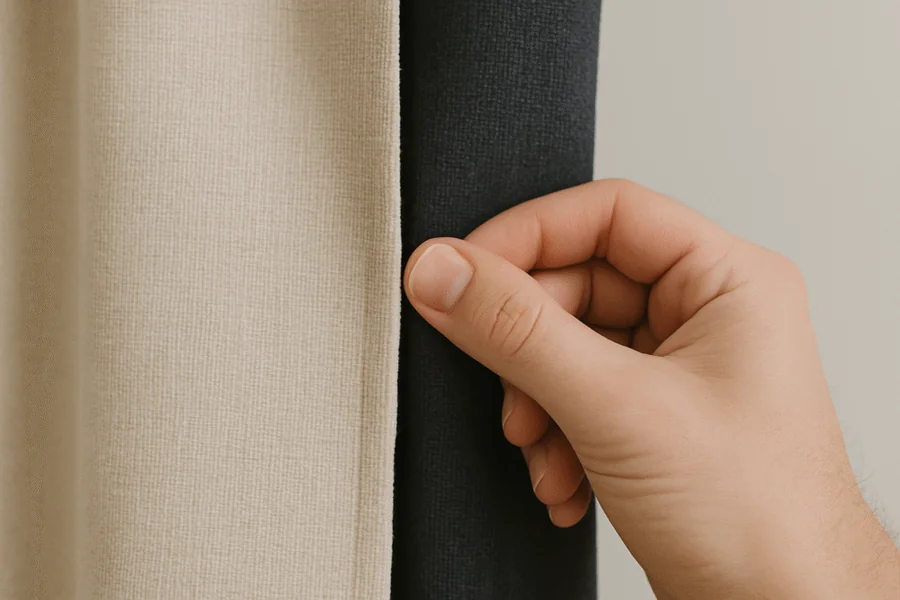
Choosing the right black out material isn’t just about picking one that blocks light. Different fabrics vary in structure, print quality, durability, and flexibility, all of which affect how well they perform in real-world business settings.
Use the steps below to make a confident, practical choice based on your specific needs.
- Start by Defining the Purpose
Before comparing materials, be clear on how the fabric will be used. Black out fabrics are commonly used for:
- Exhibition displays and banners
- Window coverings or partitions
- Backdrops and stage graphics
The intended use matters because some fabrics are designed for visual impact, while others prioritize insulation or privacy. For example, display-focused fabrics are optimized for print clarity, while curtain-style black out materials focus more on light and temperature control.
- Understand the Fabric Construction
Not all blackout fabrics are built the same. Most feature multiple layers, typically with a black inner layer that blocks light completely.
Key variations include:
- 2-pass fabrics: Lighter, but may not fully conceal the inner layer
- 3-pass fabrics: Fully opaque and better for premium finishes
- Coated vs woven: Coated fabrics are more rigid, while woven options feel softer
If you need total opacity and a polished look, multi-layer (3-pass) fabrics are usually the better choice.
- Decide Between Single-Sided vs Double-Sided Printing
Some blackout fabrics are designed for printing on one side only, while others allow for double-sided graphics.
- Single-sided fabrics: Typically have a black or coated backing
- Double-sided fabrics: Feature a blockout layer sandwiched between two printable surfaces
If your display will be visible from multiple angles, double-sided options maximize visibility without show-through.
- Check Weight and Thickness (GSM)
Fabric weight, measured in grams per square metre (GSM), affects both durability and flexibility.
- Lightweight (200–250gsm): Easier to transport and install
- Midweight (250–300gsm): Balanced durability and flexibility
- Heavyweight (300gsm+): More rigid, ideal for long-term installations
Heavier fabrics tend to offer better opacity and structure, but may be harder to handle.
- Evaluate Print Compatibility and Finish
If you’re using black out fabric for branding or displays, print quality is critical.
Look for fabrics compatible with:
- Dye-sublimation printing (for vibrant colors)
- UV or latex printing (for durability and versatility)
High-quality black out fabrics enhance color depth because they prevent light from washing out the print.
- Consider Flexibility and Stretch
Some black out fabrics include slight elasticity, which can be a major advantage for:
- Tension frame systems
- Exhibition stands
- Wrinkle-free installations
Stretch fabrics allow smoother fitting and reduce the risk of creases or misalignment during setup.
- Look at Durability and Handling
Durability impacts how often the fabric needs replacing and how easy it is to reuse.
Important features include:
- Crease resistance for transport
- Fade resistance for long-term use
- Easy cleaning or stain resistance
Polyester-based black out fabrics are especially popular because they are durable, wrinkle-resistant, and low maintenance.
- Check Fire Ratings and Compliance
For commercial environments such as exhibitions, retail spaces, or public venues, fire safety standards are essential.
Many blackout fabrics are:
- B1 or M1 fire-rated (EU standards)
- Approved for indoor public use
Always verify compliance if the fabric will be used in regulated environments.
- Factor in Sustainability
If sustainability is a priority, look for fabrics made from recyclable materials or recycled fibers.
Some modern black out fabrics are:
- Made from 100% recyclable polyester
- Produced using post-consumer waste yarns
This can support environmental goals without compromising performance.
- Compare Options Based on Your Exact Use Case
Finally, bring everything together and compare fabrics based on your priorities:
- For exhibitions: lightweight, stretch, high print quality
- For interiors: insulation, softness, durability
- For retail displays: opacity, color vibrancy, structure
Exploring a range of black out fabric options can help you match the right material to your exact application, whether that’s high-impact visuals or practical space management.
Making the Right Choice
The best black out fabric isn’t a one-size-fits-all solution. It depends on how the material will be used, the level of visual quality required, and how often it will be handled or reused. By focusing on construction, weight, print capability, and durability, businesses can confidently choose a solution that delivers both performance and long-term value.