
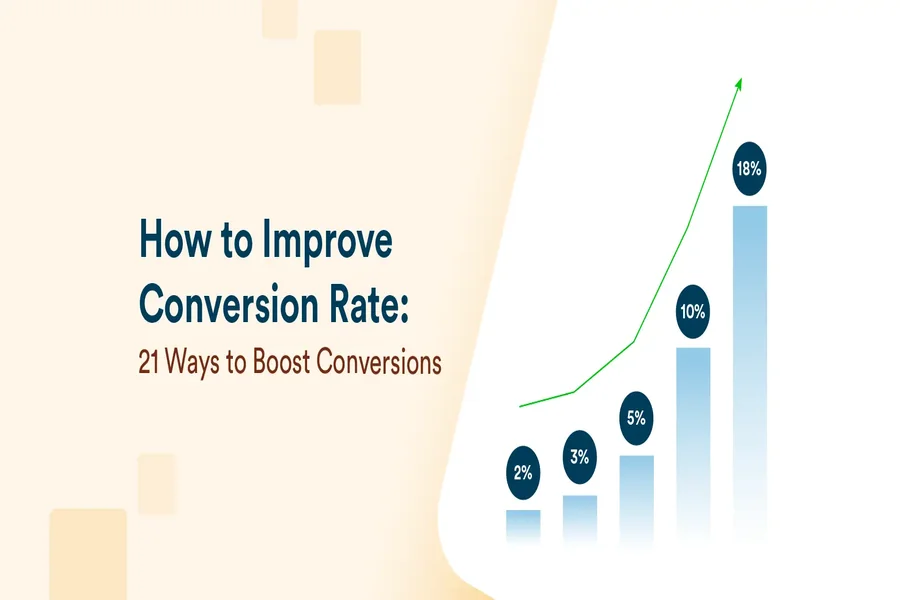

Most brands try to increase conversions by changing design.
They tweak buttons. They test headlines. They optimize layouts.
But the biggest conversion lever is often something much simpler:
Trust.
And trust doesn’t come from what you say about your product.
It comes from what other people say about their experience.
That’s where a well-timed testimonial request becomes more than a feedback tool—it becomes a direct driver of revenue.
Because when testimonials are collected consistently and placed strategically, they don’t just “look good” on a page.
They change how people decide.
The 270% Conversion Insight (And What It Really Means)
There’s a widely cited insight in e-commerce and CRO research:
Displaying customer reviews and testimonials can increase conversion rates by up to 270%.
At first glance, that sounds like a statistic.
But it’s actually a behavioral signal.
It tells us something deeper:
People don’t convert when they understand your product.
They convert when they trust the outcome.
That difference is everything.
Because most websites are built to explain.
Very few are built to reassure.
Testimonials fill that gap.
Why Testimonials Change Buyer Behavior
When someone lands on your website, they’re not just evaluating your offer.
They’re asking themselves:
- “Will this actually work for me?”
- “Has someone like me used this before?”
- “What happens after I buy?”
These are not product questions.
They are risk questions.
And testimonials answer them in a way brand copy never can.
Because they come from real people.
This creates three powerful effects:
1. Risk Reduction
A testimonial acts as proof that:
- the product works
- the experience is real
- the outcome is achievable
This reduces uncertainty.
And lower uncertainty = higher conversion.
2. Social Validation
Humans don’t like making decisions in isolation.
We look for signals:
- what others did
- what others experienced
- what others recommend
Testimonials provide that signal instantly.
Instead of thinking:
“Is this a good choice?”
The buyer shifts to:
“People like me already chose this.”
That shift shortens decision time dramatically.
3. Emotional Certainty
Features are logical.
Testimonials are emotional.
When someone sees a real person describing:
- relief
- success
- improvement
…it creates a feeling.
And decisions are rarely made on logic alone.
They are made when logic and emotion align.
Testimonials are the bridge.
Why a Testimonial Request Is the Starting Point of Growth
Most businesses think testimonials are something you “collect occasionally.”
That’s the mistake.
Because the real impact doesn’t come from having testimonials.
It comes from having a system that continuously generates them.
And that system starts with one thing:
A consistent testimonial request process.
If you don’t ask:
- you don’t collect
- you don’t build proof
- you don’t scale trust
Which means:
your conversion rate is capped.
The Hidden Conversion Gap Most Brands Ignore
Here’s what typically happens:
A business:
- gets positive feedback
- receives praise in emails
- hears good things in calls
But never turns those moments into testimonials.
So all that trust…
…disappears.
It never reaches future customers.
This creates a silent conversion gap.
Because your best marketing assets:
- are happening
- but not being captured
A simple testimonial request closes that gap.
It turns:
- private satisfaction
→ into - public trust signals
And that transformation directly impacts conversion.
Why Consistency Matters More Than Volume
One strong testimonial helps.
Ten testimonials help more.
But the real advantage comes from consistency.
When visitors see:
- multiple testimonials
- across different pages
- from different people
- over time
…it signals something powerful:
This isn’t a one-time success.
This is a repeatable experience.
And repeatability builds confidence.
Confidence drives action.
Where Testimonials Increase Conversion the Most
Not all placements are equal.
Testimonials work best when they appear exactly where doubt appears.
That usually happens at key decision points:
1. Landing Pages
Right after a claim is made:
- “Save time”
- “Increase revenue”
- “Simplify your workflow”
A testimonial validates the claim.
Without it, the claim feels like marketing.
With it, the claim feels real.
2. Pricing Sections
This is where hesitation peaks.
Users are asking:
- “Is it worth it?”
- “What if it doesn’t work?”
A testimonial here reduces price sensitivity.
Because the focus shifts from cost → outcome.
3. Checkout Flow
At this stage, small doubts can kill conversions.
Testimonials act as reassurance:
- others completed this
- others had a good experience
Which helps users move forward.
4. Product Pages
Instead of just describing features, testimonials show:
- how those features translate into results
That makes the product easier to understand—and easier to trust.
Why Video Testimonials Amplify Conversion Even More
Not all testimonials are equal.
Video testimonials tend to outperform text.
Because they add:
- tone of voice
- facial expressions
- authenticity signals
Which makes the experience feel more believable.
A written testimonial can be dismissed as:
“maybe edited”
A video testimonial feels harder to fake.
That perceived authenticity increases trust faster.
And faster trust = faster conversion.
The Real Mechanism: Trust → Confidence → Action
When you break it down, the conversion impact of testimonials follows a simple chain:
Testimonial request → More testimonials → More trust → More confidence → More conversions
But most businesses stop at the first step.
They don’t systemize it.
They don’t scale it.
They don’t treat it as infrastructure.
And that’s where they lose.
From Random Feedback to Conversion Engine
The difference between average and high-converting brands is not better copy.
It’s better proof.
Instead of:
- occasionally asking
- manually collecting
- inconsistently displaying
High-performing brands:
- trigger testimonial requests at key moments
- guide responses with structure
- remove friction completely
- reuse testimonials across channels
This creates a compounding effect.
Each new testimonial:
- strengthens trust
- improves performance
- feeds the system
Over time, testimonials stop being content.
They become a conversion engine.
Final Thoughts
If your goal is to increase conversion rates, you don’t need to start with design.
You need to start with trust.
And trust doesn’t scale through claims.
It scales through customer voices.
That’s why a simple testimonial request is far more powerful than it looks.
It’s not just asking for feedback.
It’s unlocking:
- proof
- credibility
- reassurance
And when those elements are present at the right moments, conversion is no longer something you chase.
It becomes something that naturally follows.
If there’s one takeaway from this:
You don’t need more persuasion.
You need more proof.
And proof starts by asking.


