
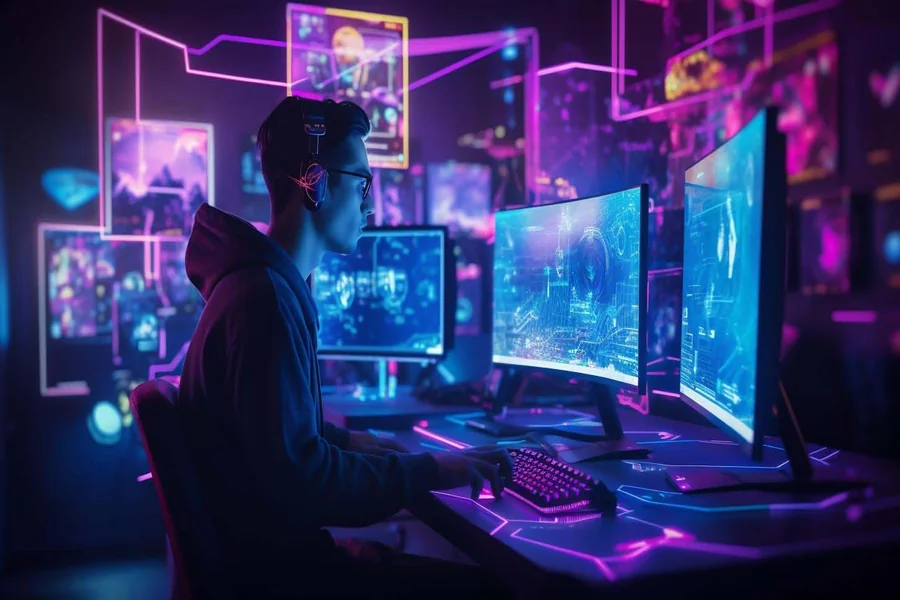

Introduction: A New Era of Play
Online Slot Depo 5K has become the beating heart of digital entertainment in the 21st century. Once a niche activity enjoyed by tech enthusiasts, it’s now a global phenomenon uniting millions of players across continents. From mobile apps to immersive virtual worlds, online gaming offers endless excitement, competition, and connection—all accessible from a device in your hand.
1. The Origins of Online Gaming
The roots of online gaming go back to the 1970s when university computer networks hosted text-based adventures like MUD (Multi-User Dungeon). These early games planted the seeds for modern multiplayer experiences. By the 1990s, with the rise of the internet, titles like Quake and Diablo allowed players to challenge each other in real-time, laying the foundation for the online gaming industry we know today.
2. The Internet Boom and Multiplayer Expansion
As internet speeds improved in the 2000s, multiplayer gaming took off dramatically. Games like Counter-Strike, World of Warcraft, and Runescape became icons of online play. Players were no longer competing against computers—they were battling real people across the globe. This sense of competition and connection turned gaming into a lifestyle rather than just a pastime.
3. Mobile Gaming: Accessibility for Everyone
The introduction of smartphones completely transformed the landscape. Mobile gaming made entertainment accessible to anyone, anywhere. Titles such as PUBG Mobile, Clash Royale, and Candy Crush Saga attracted players of all ages. This democratization of gaming created a multi-billion-dollar industry that continues to dominate app stores and global revenue charts.
4. The Rise of Esports and Competitive Gaming
What was once a hobby is now a profession. Esports has emerged as a massive competitive arena with tournaments offering millions in prize money. Games like League of Legends, Fortnite, and Valorant are played professionally in stadiums filled with fans, while millions more watch online. Esports organizations, sponsorships, and player salaries mirror those of traditional sports leagues.
5. Gaming as a Social Platform
Beyond competition, online gaming has become a vibrant social ecosystem. Players use in-game voice chat, Discord servers, and social media to communicate, strategize, and form friendships. Games like Fortnite or Minecraft are as much about creativity and collaboration as they are about competition. For many, these digital spaces have replaced traditional social hangouts.
6. Streaming and the New Digital Celebrities
The rise of platforms like Twitch, YouTube Gaming, and Kick has created a new generation of digital celebrities. Streamers and content creators entertain millions through live gameplay, commentary, and tutorials. This trend has turned gaming into both a performance and a profession—where creativity, humor, and skill attract followers and sponsorships.
7. Technology Driving Innovation
Technology continues to push online gaming forward. Artificial intelligence (AI) enhances game mechanics, while virtual reality (VR) and augmented reality (AR) blur the line between physical and digital worlds. Meanwhile, cloud gaming services like Xbox Cloud Gaming and GeForce Now eliminate the need for expensive hardware, allowing anyone with a good internet connection to play high-end games.
8. The Business Behind the Fun
The online gaming industry is now worth more than $200 billion, surpassing film and music combined. Revenue streams come from in-game purchases, subscriptions, and advertising. Developers are adopting “free-to-play” models that rely on microtransactions—giving players free access but offering paid customization options and upgrades.
9. Psychological and Cognitive Benefits
Contrary to old stereotypes, online gaming has numerous mental and cognitive benefits. Research shows that gaming can improve reaction time, decision-making, teamwork, and multitasking abilities. Many games also teach resilience and problem-solving, as players learn through trial, error, and adaptation. Of course, moderation remains key to maintaining a healthy balance.
10. Community Building and Inclusion
Online gaming fosters communities that transcend borders, languages, and backgrounds. Players form teams, clans, and online friendships that often last for years. Games like Final Fantasy XIV and Genshin Impact have inclusive global fanbases that emphasize creativity and collaboration. Many platforms now also support cross-platform play, allowing friends to connect regardless of device.
11. Challenges: Cybersecurity and Toxicity
Despite its positives, the online Slot Bet 200 world isn’t without challenges. Issues such as cyberbullying, data breaches, and cheating remain major concerns. Toxic behavior and online harassment can harm communities. However, developers are implementing AI moderation tools, stricter policies, and awareness campaigns to promote healthy and respectful gaming environments.
12. The Future: Metaverse and Play-to-Earn
The next frontier of online gaming lies in the metaverse—a shared virtual universe powered by blockchain and AI. Players will be able to own digital assets, trade NFTs, and even earn cryptocurrency through play-to-earn models. Games like Axie Infinity and The Sandbox are early examples of this new digital economy. The future promises a seamless blend of entertainment, economy, and identity.
Conclusion: The Game Never Ends
Online gaming is no longer just a source of entertainment—it’s a culture, a career, and a connection point for millions. It has reshaped how people interact, learn, and earn in the digital world. As technology evolves, gaming will continue to push boundaries, offering new worlds to explore and new ways to connect. In the age of online gaming, the game truly never ends.